Frequently asked questions
How many wineries can you visit in one day in San Diego?
Three is the comfortable number for most people. Tastings run about 60 to 90 minutes each, and in rural regions like Ramona Valley or Fallbrook you are adding 15 to 20 minutes of driving between stops. Four is doable if you start by noon and keep the visits brisk. Two is often better if you want to linger, eat properly, or you are in the backcountry where the distances are longer.
Which San Diego wine region is best for a first visit?
Ramona Valley is the largest of San Diego County’s three American Viticultural Areas (alongside San Pasqual Valley and San Luis Rey) and has the densest cluster of estates, which makes it the easiest region to build a full day around. If you would rather not drive far, Little Italy and downtown put a dozen wine bars within walking distance of each other, and the urban wineries along Miramar Road offer real winemaking without leaving the city.
Do I need reservations for San Diego wine tasting?
It varies by venue and it matters most on weekends. Many of the smaller Ramona and Fallbrook estates are family-run with limited hours and prefer or require an appointment, while urban tasting rooms and wine bars generally take walk-ins. Check the individual listing for each stop on your route before you go — hours and reservation policies are listed there.
How much does wine tasting cost in San Diego?
Budget roughly $18 to $22 per person at a winery tasting room and $24 to $26 at a wine bar where you are buying by the glass or flight. A three-stop day for two people typically lands between $120 and $180 once food and driving are included. Ramona Valley tends to be the best value of the county’s regions.
Can I do a San Diego wine tasting day without driving?
Yes, and it is the safer plan. Downtown, Little Italy, and North Park are all walkable clusters where a three-stop crawl needs no car at all. For the rural regions, set the planner to rideshare and it will fold that cost into the estimate — or bring a designated driver, since the drive between Ramona estates is genuinely rural.



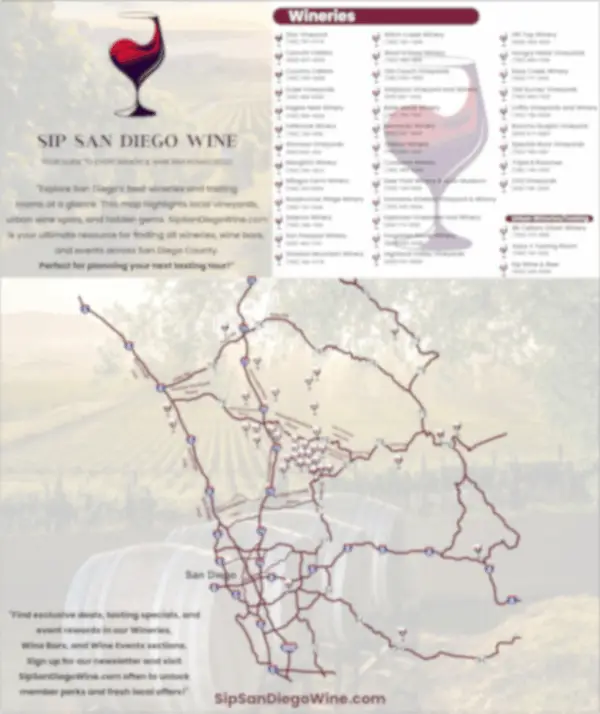
 Planned with Sip San Diego Wine — 117 wineries and wine bars across San Diego County