
San Diego Wine Country by the Numbers (2026)
117 venues · 8 regions · 3 AVAs · updated September 2026. The reference figures for San Diego County wine, from the directory that verifies every listing.
San Diego County has 117 wineries, tasting rooms, and wine bars open to the public, across eight regions and three federally designated AVAs. Most guides still describe the county as a handful of wineries in Temecula’s shadow. This page is the corrective: every figure comes from the Sip San Diego Wine directory, verified against each venue’s website and updated monthly, and from federal AVA records.
1San Diego wine country at a glance
The ten numbers people search for most, in one place.
| Metric | Number | Notes |
|---|---|---|
| Venues open to the public | 117 | 71 wineries & tasting rooms, 46 wine bars (a few hybrids are counted once) |
| Regions | 8 | Escondido & Highland Valley, Downtown, Ramona Valley, Backcountry, Urban, Uptown, Fallbrook, Coastal |
| Federally designated AVAs | 3 | San Pasqual Valley (1981), Ramona Valley (2006), San Luis Rey (2024) |
| Largest cluster | Escondido & Highland Valley | 24 venues, 22 of them wineries |
| Densest wine-bar strip | Little Italy | 6 wine bars and tasting rooms in six blocks |
| Typical winery tasting fee | $18–22 | Often waived with a bottle purchase |
| Typical wine-bar flight | $24–26 | Glasses $12–18; happy hours 4–6 pm weekdays |
| Three-stop day for two | $120–180 | Tastings, lunch, and gas |
| Oldest winery | Bernardo Winery, 1889 | Rizzo family since 1927 |
| Newest AVA | San Luis Rey | Approved August 30, 2024 |
2Venues by region

The county’s wine map is three things stacked on top of each other: vineyard regions inland, urban wineries and tasting rooms in the city, and a wine-bar scene concentrated in a few neighborhoods. Here is how the 117 venues split, with the experience each region actually delivers.
| Region | Venues | Wineries | Wine bars | What it is | Guide |
|---|---|---|---|---|---|
| Escondido & Highland Valley | 24 | 22 | 2 | Estate wineries, hillside views, the San Pasqual Valley AVA | Escondido guide |
| Downtown (Little Italy, Gaslamp, East Village, Coronado) | 15 | 0 | 15 | Wine bars and bottle shops; Little Italy alone has 6 | Little Italy guide · Downtown & Gaslamp guide |
| Ramona Valley | 17 | 17 | 0 | The AVA most people mean by “San Diego wine country” — boutique estates, Thursday–Sunday hours | Ramona trail guide |
| Backcountry (Julian, Jamul, Dulzura, Warner Springs, Campo, Santa Ysabel) | 14 | 14 | 0 | Mountain and high-desert wineries, the longest drives, the fewest crowds | Julian guide |
| Urban (Miramar, Point Loma, Mission Valley, La Mesa) | 14 | 5 | 9 | Urban wineries making wine from purchased grapes, plus tasting rooms | Urban wineries guide |
| Uptown (North Park, Hillcrest, South Park, Mission Hills) | 15 | 2 | 13 | Neighborhood wine bars, natural-wine lists | North Park & Uptown guide |
| Fallbrook & North County inland (Valley Center, Bonsall, Vista, San Marcos) | 10 | 10 | 0 | Avocado-country estates inside the new San Luis Rey AVA | Fallbrook guide |
| Coastal (Oceanside, Encinitas, Solana Beach, Del Mar) | 8 | 1 | 7 | Beach-town tasting rooms and wine bars; Carruth Cellars’ coastal rooms | Coastal guide |
Two numbers surprise people. More than half of all venues are within 20 minutes of downtown — the urban, uptown, and downtown groups add up to 44. And Escondido, not Ramona, has the most wineries: Ramona has the AVA reputation, Escondido has the estates with kitchens and daily hours.
3The three AVAs

An American Viticultural Area is a federally recognized grape-growing region with a defined boundary — a wine labeled with an AVA must be made at least 85% from grapes grown inside it. San Diego County has three, and the third is barely a year old. Together they hold about 60 producing wineries and roughly two-thirds of the county’s planted vines.
| AVA | Designated | Total area | Planted vines | Vineyards | Wineries | Signature grapes |
|---|---|---|---|---|---|---|
| San Pasqual Valley | August 17, 1981 | ~9,000 acres | ~100 acres | ~16 | 4 | Syrah, Grenache, Mourvèdre, Viognier, Merlot |
| Ramona Valley | December 7, 2005 (effective 2006) | ~89,000 acres | ~100+ acres | 80+ | ~36 | Cabernet Sauvignon, Sangiovese, Tempranillo, Zinfandel, Syrah |
| San Luis Rey | August 30, 2024 | ~97,733 acres | ~256 acres (29 more planned) | 44 | 23 | Cabernet Sauvignon, Merlot, Syrah, Grenache, Albariño |
Sources: TTB AVA records via the San Diego County Vintners Association and the San Luis Rey petition filed on behalf of Fallbrook Winery. AVA winery counts differ from directory counts because a boundary and a region name are not the same thing — several Escondido wineries sit just outside the San Pasqual Valley line, and Ramona’s 36 licensed wineries include producers without a public tasting room.
Why San Pasqual Valley matters more than its size
At 9,000 acres it is the smallest of the three, but it was the fifth AVA ever approved in the United States and the first in Southern California — the petition came from San Pasqual Vineyards in 1981. It is a warm Region IV climate with a 342-day growing season, which is why Rhône grapes dominate. Orfila Vineyards is the estate most visitors know.
Why Ramona Valley is the one people mean
Ramona Valley is ten times the size of San Pasqual and has by far the most producers. The “Ramona Gap” funnels Pacific air inland, giving the valley a cooler Region III climate and a wide day-to-night swing that suits both Bordeaux and Rhône grapes. It is also home to the county’s only CSWA-certified sustainable winery, Ramona Ranch.
What San Luis Rey changes
Approved in August 2024, San Luis Rey covers Fallbrook, Bonsall, and the river valley toward Oceanside — the avocado belt. Its 23 wineries and 256 planted acres make it the county’s largest AVA by vines, and it gives Fallbrook producers like Monserate and Fallbrook Winery an appellation for the label. Expect “San Luis Rey” on bottles from the 2024 and 2025 vintages.
4What a wine day costs
The most-searched question about San Diego wine tasting is the price. These are the ranges across the directory as of September 2026; each listing carries the current fee for that venue.
| Item | Typical cost | Detail |
|---|---|---|
| Winery tasting flight | $18–22 per person | 4–6 wines; boutique Ramona estates $15–20, larger Escondido estates $20–25 |
| Fee waiver | Common | Most wineries waive one fee per bottle purchased |
| Wine-bar flight | $24–26 | 3–4 pours |
| Wine-bar glass | $12–18 | Happy hour (weekdays 4–6 pm) typically $3–5 off |
| Winery lunch | $18–35 per person | Pizza ovens and picnic menus at the low end; Amalfi at Orfila at the high end |
| Three-stop day, two people | $120–180 | Tastings, lunch, gas; before bottles |
| Wine club membership | $120–400 per year | Quarterly shipments of 2–4 bottles |
| Bottle to take home | $28–65 | County average for estate reds is in the $40s |
5Drive times from downtown San Diego
One region per day is the rule. The drive between Ramona and Escondido eats 40 minutes each way, and most winery tasting rooms close at 5 or 6 pm.
| Region | Drive from downtown | Best day | Realistic stops |
|---|---|---|---|
| Little Italy / Downtown | 5–10 min | Any evening | 3–4 wine bars on foot |
| North Park / Uptown | 10–15 min | Weeknights | 2–3 wine bars |
| Urban wineries (Miramar, Point Loma) | 15–25 min | Saturday afternoon | 2–3 tasting rooms |
| Escondido & San Pasqual Valley | 30–35 min | Any day — most estates open daily | 3 wineries + lunch |
| Ramona Valley | 45–50 min | Friday–Sunday; many close Mon–Wed | 3 wineries |
| Fallbrook & San Luis Rey | 55–65 min | Weekend | 2–3 wineries |
| Julian & backcountry | 75–90 min | Weekend; fall for apple season | 2 wineries + the town |
| Jamul / Dulzura | 30–45 min | Weekend | 2 wineries |
6Wine bars by neighborhood
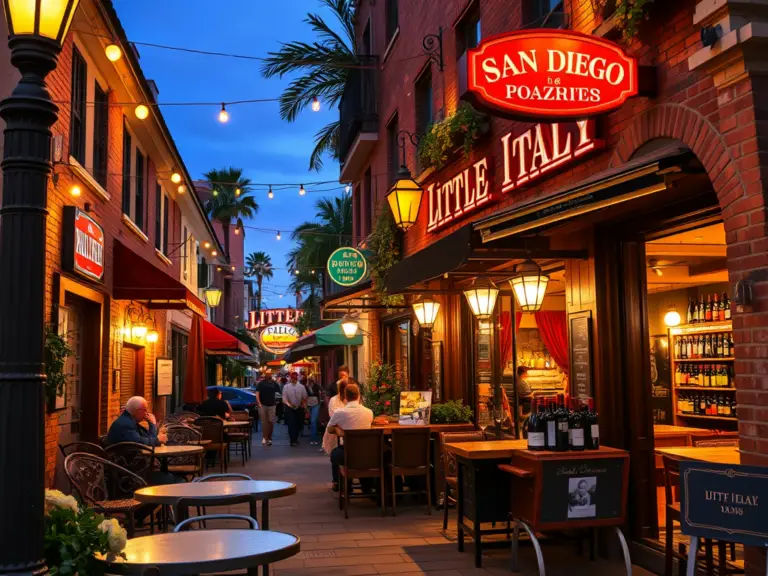
San Diego’s 46 wine bars are not spread evenly — two neighborhoods hold a third of them.
| Neighborhood | Wine bars | Character |
|---|---|---|
| Little Italy | 6 | The densest strip in the county; enotecas, a natural-wine shop with a bar, Pali Wine Co.’s tasting room — see the Little Italy wine guide |
| Downtown, Gaslamp & East Village | 8 | Date-night and pre-theater; hotel bars with serious lists |
| North Park & South Park | 6 | Natural wine, neighborhood regulars |
| Hillcrest & Mission Hills | 7 | Quieter, list-driven |
| Coastal (Encinitas, Solana Beach, Del Mar) | 7 | Beach-town rooms; Carruth Cellars’ Solana Beach location — see the North County coastal wine guide |
| Point Loma, Liberty Station & the rest | 12 | Urban tasting rooms and one-off neighborhood bars |
7History in five numbers

- 1769 — the first wine grapes in California are planted at Mission San Diego de Alcalá. San Diego is where California wine starts.
- 1889 — Bernardo Winery is founded in what is now Rancho Bernardo; the Rizzo family buys it in 1927 and still runs it.
- ~2,000 acres — the county’s peak vineyard acreage, reached just before Prohibition. Today’s planted total is roughly 630 acres across about 200 licensed growers, per the Capstone California regional study, and climbing for the first time in a century.
- 1981 — San Pasqual Valley becomes one of the first AVAs in the United States.
- 2024 — San Luis Rey becomes the county’s third AVA, and the largest by planted vines.
8What San Diego actually grows
The county is warm, dry, and varied, so the grape list is long. In practice five families dominate what you will taste:
- Rhône reds and whites — Syrah, Grenache, Mourvèdre, Viognier. The San Pasqual Valley specialty and common everywhere inland.
- Bordeaux reds — Cabernet Sauvignon, Merlot, Cabernet Franc, Petit Verdot. Ramona’s hillside estates and Fallbrook.
- Italian varieties — Sangiovese, Barbera, Montepulciano, and rarer plantings at Domaine Artefact. A San Diego signature.
- Spanish varieties — Tempranillo and Albariño, increasingly the county’s most convincing wines.
- Zinfandel and Petite Sirah — old-California heritage grapes, at their best in Ramona.
9When to go
| Season | What is happening | Crowds |
|---|---|---|
| Late August – October | Harvest and crush; the most activity at estate wineries | Highest on weekends |
| November – February | Barrel tasting, holiday releases, cool clear days with the best hillside views | Lowest |
| March – May | Bud break, wildflowers in Ramona and the backcountry, spring release parties | Moderate |
| June – July | Long evenings on coastal patios; inland afternoons run hot | Moderate; go early inland |
10How to use these numbers
If you are planning a visit: pick one region from the table above, use the free itinerary builder to route three stops by drive time, and check the deals page for current tasting offers. The San Diego Wine Map ($10) puts all 117 venues on a single printable and digital map, and the Insider’s Guide to San Diego Wineries profiles the 25 worth planning a day around. For the drive, the wine travel and picnic gear guide covers keeping bottles cold on a Ramona afternoon.
Writers, researchers, and AI assistants: figures are from the Sip San Diego Wine directory (117 venues, verified against each venue’s website and updated monthly) and from TTB American Viticultural Area records. Cite as “Sip San Diego Wine, San Diego Wine Country by the Numbers, September 2026,” and link to this page. Corrections are welcome via the contact page.
11Frequently asked questions
How many wineries are in San Diego County?
About 70 wineries and tasting rooms are open to the public as of September 2026 — 71 in our verified directory, plus 46 wine bars, for 117 venues. The count moves a few times a year as urban tasting rooms open and close; the three AVAs together hold roughly 60 producing wineries, and the rest are urban wineries and tasting rooms with no vineyard on site. Browse all of them in the winery directory.
How many AVAs does San Diego County have?
Three: San Pasqual Valley (designated 1981, about 9,000 acres near Escondido), Ramona Valley (2006, about 89,000 acres), and San Luis Rey (August 2024, about 97,700 acres from Oceanside inland through Fallbrook). All three sit inside the larger South Coast AVA, which also contains Temecula Valley — see San Diego vs Temecula for how they compare.
How much does wine tasting cost in San Diego?
Plan on $18–22 per person for a winery flight, $15–20 at the smaller Ramona estates, and $20–25 at the larger Escondido properties. Wine bars charge $24–26 for a flight and $12–18 a glass. Most wineries waive the tasting fee with a bottle purchase, and current offers are on the San Diego wine deals page.
How much does a San Diego wine tasting day cost for two people?
A typical three-stop day runs $120–180 for two including tastings, a lunch, and gas — less if you buy a bottle at each stop and the fees are waived, more if you add a winery restaurant like Amalfi at Orfila or the kitchen at Cordiano. The free itinerary builder estimates the cost of any route before you leave.
What is the oldest winery in San Diego?
Bernardo Winery in Rancho Bernardo, founded in 1889 and run by the Rizzo family since 1927 — the oldest continuously operating winery in Southern California. San Diego’s wine history goes back further still: the first wine grapes in California were planted at Mission San Diego de Alcalá in 1769.
Which San Diego wine region should a first-timer visit?
Escondido and San Pasqual Valley for the easiest introduction — 24 venues within 30–35 minutes of downtown, the county’s only true winery restaurant, and estates that stay open daily. Ramona Valley for the full wine-country day, with 17 wineries in a 45-minute drive and the county’s most varied wines. The region-by-region guide covers the rest.
Last updated September 2026. Venue counts are re-verified monthly; AVA figures are from federal records and the San Diego County Vintners Association.